Learn / Pediatric ophthalmology
Pediatric ophthalmology
The eye that is still learning to see.
A child's visual cortex is built by what the eyes send it in the first years. Anything that blurs or misaligns one eye in that window costs vision for life, which is why children are screened and why a white pupil is an emergency.
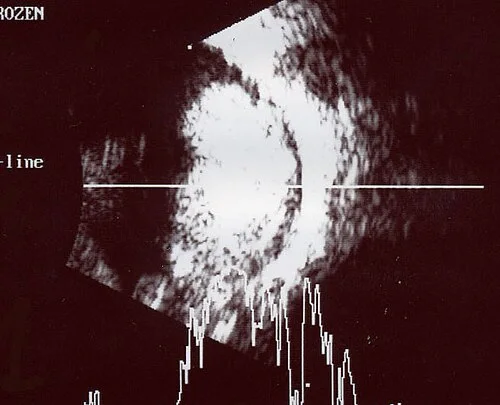
Ultrasound of a child with a white pupilOpen in the atlas
Leukocoria: the white pupil
Urgent · same dayA white reflex instead of a red one, in a photograph or on the red reflex test at the newborn and six-week checks, is retinoblastoma until proven otherwise: the commonest intraocular cancer of childhood, curable when caught, fatal when not. The other causes (congenital cataract, Coats disease, persistent fetal vasculature, retinopathy of prematurity, toxocariasis) all need an ophthalmologist too. Same-week referral, always.

Amblyopia
A lazy eye: reduced vision in an eye that is structurally normal, because the brain suppressed a blurred or deviated image during the critical period. Causes: strabismus, unequal refraction (anisometropia), and deprivation (a cataract, a ptosis covering the pupil). Treated by correcting the refraction and patching or penalising the good eye, and only effective while the cortex is still plastic, so early detection is everything.
Strabismus
A squint: the eyes are not aligned. Esotropia (turned in) and exotropia (turned out) in childhood are usually concomitant (the same angle in every gaze) and are about amblyopia and binocular vision; a sudden squint with diplopia in an older child or adult is a nerve palsy and a different conversation. The corneal light reflex (Hirschberg) and the cover test find it. Beware the pseudo-squint of wide epicanthal folds, which the cover test disproves.
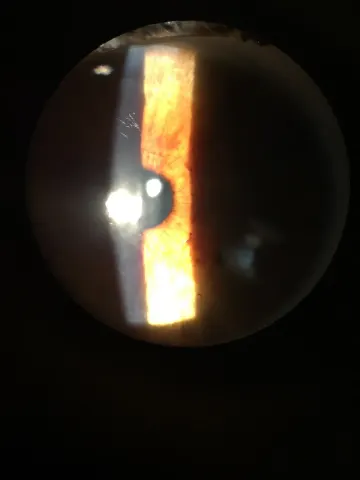
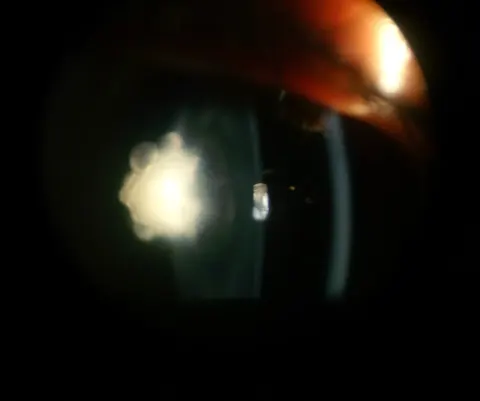
Congenital cataract
A dense congenital cataract must be removed in the first weeks of life or the eye never learns to see. It is found on the red reflex test at birth. Causes include intrauterine infection, metabolic disease and inheritance; the work-up follows the surgery.
The child with a red eye
Neonatal conjunctivitis in the first month can be gonococcal (profuse pus, in days, sight-threatening) or chlamydial (weeks, systemic treatment needed). Orbital cellulitis in a child with sinusitis is a swollen, red, painful eye with proptosis, restricted movement and fever, and needs admission and imaging. Preseptal cellulitis has the lid swelling without the proptosis, the pain on movement or the vision loss.
Go and look
Where this topic leads