Presentations / Proptosis and the pupil
Proptosis and the abnormal pupil
The eye that bulges, and the pupils that do not match.
Two presentations that are noticed by someone else: an eye pushed forward, and pupils of different sizes. Each has a short list of causes and one or two that cannot wait.
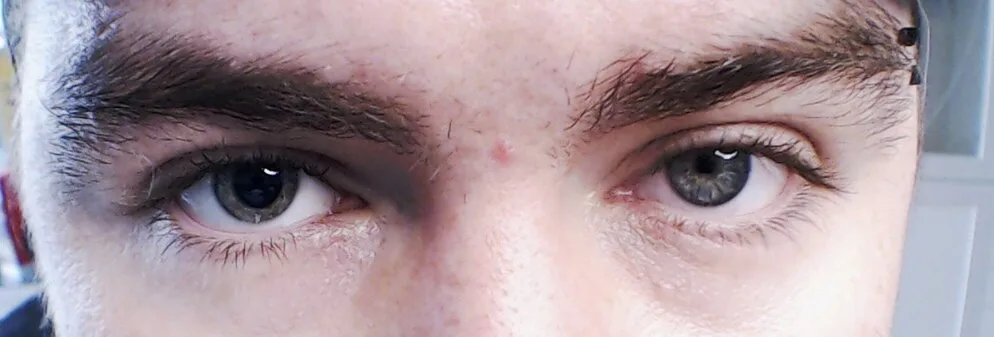
One pupil larger than the other, noticed by a friendOpen in the atlas
Proptosis
Urgent · same dayMeasured with an exophthalmometer, judged from above and behind. Thyroid eye disease is the commonest cause in adults: lid retraction, lid lag, proptosis, restricted upgaze, and in its worst form compression of the optic nerve. Orbital cellulitis is the commonest cause in children and an emergency in anyone. An orbital tumour, a carotid-cavernous fistula (a pulsating eye with a bruit and dilated corkscrew vessels), and orbital inflammation make up the rest. Pseudoproptosis is a big myopic eye or a retracted lid.
| Cause | The clue | The step |
|---|---|---|
| Thyroid eye disease | Lid retraction, lid lag, restricted upgaze, both eyes | Thyroid function, CT of the orbits, the optic nerve checked |
| Orbital cellulitis | Pain, fever, red lids, restricted movement, in days | Admission, intravenous antibiotics, CT, ENT |
| Orbital tumour | Slow, painless, one eye, sometimes displaced | MRI of the orbit |
| Carotid-cavernous fistula | A pulsating eye, a bruit, corkscrew conjunctival vessels, after trauma | Angiography |

Anisocoria
Urgent · same dayMeasure both pupils in the light and in the dark. If the difference is greater in the dark, the small pupil is the abnormal one: it cannot dilate, and that is a Horner syndrome (with ptosis) or old iritis. If the difference is greater in the light, the large pupil is the abnormal one: it cannot constrict, and that is a third nerve palsy (with ptosis and diplopia), a tonic pupil (slow, in a well young woman), a pharmacological pupil, or traumatic damage to the sphincter. If it is the same in both, physiological. A painful Horner needs the carotid imaged; a painful third nerve palsy with a big pupil needs an aneurysm excluded, the same day.
Go and look
Where this topic leads